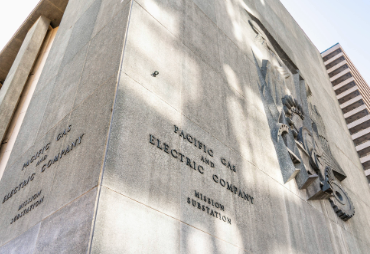
San Francisco’s holiday season was disrupted in late December when a fire inside a Pacific Gas & Electric (PG&E) substation triggered a massive power outage, leaving an estimated 130,000 customers without electricity at the height of the event.
The outage began in the afternoon of December 20th, following reports of smoke inside PG&E’s Mission substation at 8th and Mission streets. Power was restored gradually over the following days, with PG&E reporting that most customers regained service by early December 23rd. The outage unfolded during one of the city’s busiest weekends of the year, disrupting businesses, transportation and daily activity across multiple neighborhoods.
A Global Pattern Behind Local Outages
While the investigation into the precise cause is ongoing, the broader circumstances surrounding the event are already well understood within the energy community.
Failures of this kind are rarely isolated incidents. They reflect a pattern that has surfaced repeatedly across regions and grid systems in recent years. From the substation fire near Heathrow Airport that shut down one of the world’s busiest travel hubs, to transformer failures in Brazil that cascaded into regional outages, the same sequence continues to emerge.
Thermal stress inside electrical systems builds over time as joints loosen, connections degrade and insulation wears. These changes do not occur instantly. They appear first as subtle temperature trends that are often missed by traditional, calendar-based inspections. By the time a substation fire becomes visible, the underlying condition has typically been developing quietly for months or even years.
This trajectory is not unique to San Francisco. In case after case, internal degradation becomes external disruption only after early warning signs have gone undetected.
The Limits of Periodic Inspections
Most electrical infrastructure still relies on periodic inspections. These checkups offer only intermittent snapshots of an asset’s health. Without continuous visibility, gradual wear and degradation remain invisible until they become critical.
Moving toward condition-based maintenance supported by continuous thermal monitoring allows operators to identify risk earlier and intervene before localized issues escalate into outages.
How SYTIS Helps Detect Risk Earlier
Preventing incidents like the San Francisco blackout requires visibility into the earliest stages of failure, not just the moment conditions become critical. At SYTIS, we focus on bringing those early thermal signatures into focus before they become headlines.
SYTIS provides remote, continuous thermal monitoring solutions that detect subtle temperature changes as they develop. Combined with AI-driven analytics and automated alarming, these systems enable operators to identify emerging electrical stress and asset degradation in real-time.
With solutions such as the TC-90™ Bi-Spectral Card Camera and the GridSafe™ Skid System, organizations can:
- Monitor critical assets remotely and continuously
- Automatically detect and alarm on thermal anomalies
- Track degradation trends over time rather than relying on isolated checks
- Improve personnel safety, operational uptime and infrastructure resilience
This level of insight allows maintenance teams to prioritize interventions more precisely, reduce unplanned failures, and help maintain public confidence in the systems that communities depend on every day.
Power outages like the one that struck San Francisco serve as a reminder that ignoring early thermal signals does not prevent failure. It only delays detection until the consequences are far more disruptive.